Hello dear expats,
Howdy?
I know you’re officially on this blog because you did it!
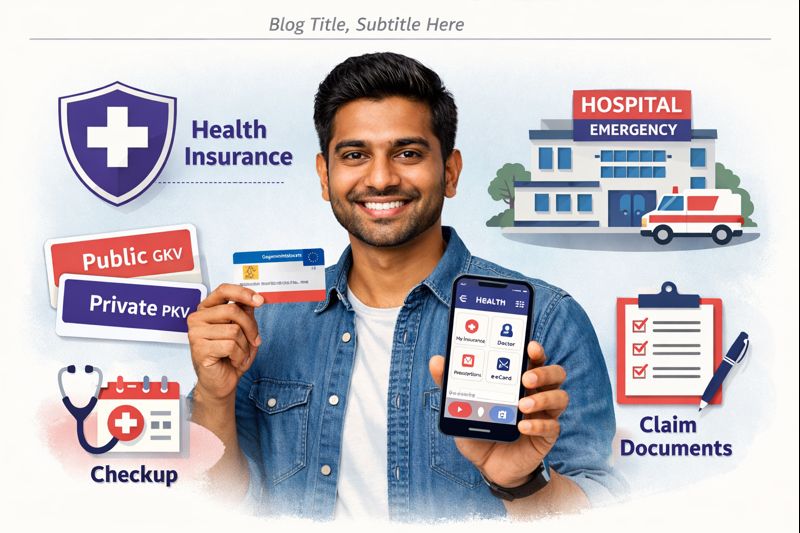
🎉 You picked a Krankenkasse, filled out all the paperwork, decoded German bureaucracy (barely), and got yourself insured.
Congrats! You’re Insured in Germany—Now What? But now that you’re officially covered, here comes the real question:
“How do I use my health insurance in Germany?“
Don’t worry, you’re not alone—and you’re in the right place AKA brizz.me, a platform designed for expats living in Germany where we not only offer guidance on essential topics but also provide practical solutions for finding rentals, local services, and navigating life in your new city.
Whether you’re a student, expat, job seeker, or just new to the German system, this post will walk you through everything from finding your Hausarzt to getting your meds—all explained with clarity, wit, and real-life insider tips 😉.
How to Find a Hausarzt (Family Doctor) in Germany
In Germany, your Hausarzt is your healthcare bestie. Most people go first to a family doctor or general practitioner (in German: Allgemeinmedizin or Innere Medizin) — and children usually see a paediatrician (Kinderarzt). Collectively, they’re all called Hausärzte.
Your Hausarzt is your first point of contact for almost everything: colds, mental health concerns, routine checkups, and preventive care such as vaccinations and screenings. They take your medical history, perform initial examinations, treat many common conditions, and coordinate any further medical steps you might need.
Unlike some countries where you can visit a dermatologist directly and say, “Fix my face,” in Germany you generally need a referral (Überweisung) from your Hausarzt to see a specialist. If it turns out you need more specialised care — for example, orthopaedic, dermatological, or internal medicine treatment — your Hausarzt will issue that referral or send you to the hospital for inpatient care.
That being said, it’s sometimes possible to go directly to a specialist without a referral, depending on your insurance type and region. However, starting with your Hausarzt is usually the smoother and more efficient way to navigate the system, especially if you’re new to Germany.
Now, how do you actually find a Hausarzt?
Start by searching online using trusted platforms like Doctolib, Jameda, or even Google Maps. You can filter doctors by specialty, location, ratings, and language. If you prefer to communicate in English, look for the “Spricht Englisch” (Speaks English) note in their profile or call the clinic and ask,
“Sprechen Sie Englisch?” (Do you speak English?)
Expect long wait times, even with an appointment. And if you’re a walk-in, pack snacks, download a movie or two on your phone, and have patience. (PS: I am not joking—the internet is expensive in Germany, and your doctor’s clinic will most likely not have WiFi. Two hours is just normal.)
But here’s the bonus: Due to these long wait times, your doctor can write a note stating the time you arrived and left the clinic. That counts as official proof for your employer—how cool is that?
In fact, German workplaces are pretty understanding. You just tell your boss or colleagues,
“I have a doctor’s appointment at 10 AM,” and that’s usually enough.
Your Hausarzt’s responsibilities include:
- Diagnosing common health issues and illnesses
- Referring patients to specialists via Überweisung
- Issuing medical leave certificates (Krankschreibung/ Krankmeldung)
- Renewing prescriptions for ongoing treatments
Finding a reliable Hausarzt early is crucial for a smooth healthcare experience in Germany, especially for newcomers and expats, as they help navigate the system efficiently and ensure timely access to specialist care.
Understanding the Überweisung (Referral Slip) in Germany
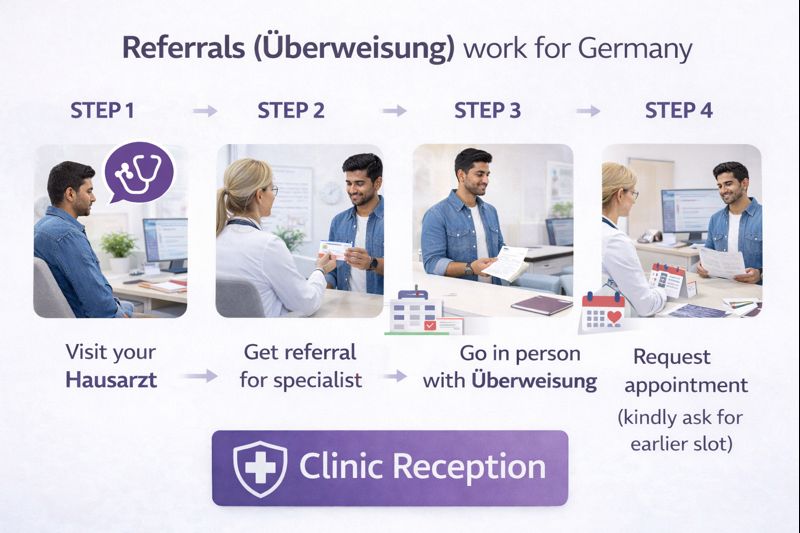
Germany loves order and control—and that includes how you access specialists. To see most specialists (like dermatologists, orthopedists, or neurologists), you need an Überweisung—a referral from your Hausarzt. This system ensures orderly care but can feel unfamiliar for newcomers. Here’s how it works:
- Visit your Hausarzt and explain your issue
- Receive an Überweisung slip for the appropriate specialist
- Take the referral physically to the specialist’s clinic
- Request an appointment and kindly request an earlier slot, if needed
Don’t just call. Go in person to the clinic with your Überweisung. It helps. 🙏 Be polite. A little kindness goes a long way. Receptionists often do their best to help—especially if you’re new and kind.
Expect wait times of up to 2 months to see a specialist. Why? Because there are fewer specialists and lots of patients—especially those with public insurance.
So:
Stay healthy.
Breathe.
Stay patient.
Say “Danke schön.”
Repeat.
The Versicherungskarte: Your Key to Health insurance in Germany
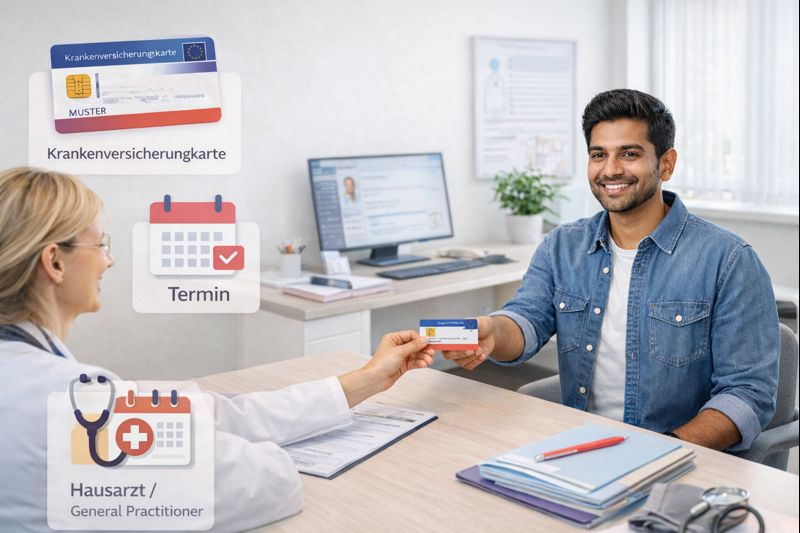
That little plastic Versicherungskarte?
It’s your golden ticket to Germany’s healthcare system. Always bring it when visiting a doctor, specialist, dentist, hospital, or pharmacy (Apotheke).
As of 2025, these cards have leveled up — many health insurers now offer digital versions (the elektronische Gesundheitskarte or eGK) that you can store securely on your smartphone through your insurer’s app. This means even if you forget your physical card at home, you can still access medical care by showing the digital version.
And here’s another cool update: prescriptions are now electronic too. At the pharmacy, simply hand over your card—physical or digital—the staff scans it, retrieves your e-prescription, and provides your medication efficiently.
✨ No slips. No chaos. Just smooth German efficiency.
Your Versicherungskarte also includes important information like your health insurance provider, membership number, and a personal PIN. It must be valid and up-to-date, so notify your insurer immediately if you change your address or switch providers.
By keeping your card with you at all times, you ensure smooth access to medical care, seamless prescription fulfillment, and compliance with German healthcare regulations, making your life as a patient far simpler and stress-free.
Decoding Prescriptions and Co-Payments with health insurance in Germany
In Germany, prescriptions from your Hausarzt come with different forms indicating coverage and payment responsibility. Your Hausarzt may hand you one of the following:
- Pink slip – Meds partially covered by insurance. You pay a €5–10 co-pay.
- White slip – Meds not covered by insurance. You pay full price.
- Green slip – Recommended OTC meds. Not covered—optional purchase.
Why do I have to pay if I have insurance?
Because the German healthcare system aims for balance: quality + accessibility + shared responsibility. That small co-pay keeps the system sustainable and discourages overuse.
Krankmeldung: How Sick Leave Works in Germany
If you fall sick and can’t go to work, your Hausarzt is also responsible for issuing your Krankmeldung — the official sick leave certificate required by your employer and health insurance (Krankenkasse).
Here’s how it works:
- You can stay home up to 3 calendar days (including weekends) without a doctor’s note — but you must inform your employer immediately. (Exception: some employment contracts may require it sooner, even on the first day).
- If your illness lasts more than 3 days, you need a Krankmeldung from your Hausarzt. It must reach your employer by the fourth day of illness (some employers require it sooner—check your contract).
- Since 2023, Krankmeldungen are digital. Your doctor sends the certificate directly to your Krankenkasse, and they forward it to your employer.
- If you remain unwell beyond the original period, your doctor will issue an extension certificate (Folgebescheinigung).
Emergency Medical Help and Weekend Healthcare in Germany
Not feeling well on a Saturday night?
Toothache at 2 AM on Sunday? Don’t worry—Germany’s got your back.
If you fall ill or face a medical emergency during weekends or holidays in Germany, there are clear options to get care quickly.
- For life-threatening emergencies, dial 112 for an ambulance—this service is free with health insurance.
- For non-critical issues outside regular office hours, you can visit an emergency doctor (Ärztlicher Bereitschaftsdienst), who is available on weekends and public holidays.
- If you need medication urgently, head to a Notfallapotheke (24/7 emergency pharmacy). Simply search online for “Notfallapotheke + [your city]”, for example, Notfallapotheke Berlin, to locate the nearest open pharmacy.
Work Accidents vs. Life Accidents in Germany
In Germany, how and where an injury occurs determines which insurance covers it. Accidents at home or during personal activities are generally covered by your public or private health insurance, while work-related injuries or accidents on your commute fall under your employer’s statutory accident insurance (Berufsgenossenschaft).
It is important to report incidents honestly and clearly, as coverage depends on the context and location of the injury. Understanding the distinction between work accidents (Arbeitsunfälle) and life accidents (Alltagsunfälle) ensures you receive the appropriate medical care and compensation.
Bonus Tips: Real Expat Wisdom
- Book your appointments early. Don’t wait until you’re dying to register with a doctor.
- Be nice. Always. Receptionists, doctors, and pharmacists really appreciate politeness. They are often overworked.
- Bring your card—every time. No exceptions.
- Ask questions. German doctors don’t spoon-feed info. Be curious and proactive.
Germany’s healthcare system might move at the pace of a sleepy sloth—but once you understand it, it’s one of the most reliable in the world. Now you’re not just insured—you’re informed and empowered.
So go forth, find your Hausarzt, flash that Versicherungskarte, and live your healthiest, sassiest German expat life.
For more details visit our blog on the German Health insurance system.
If you have any questions or comments, leave them in the comments section or mail me to diya@ananthaya.com.
Gesundheit, Darlings!